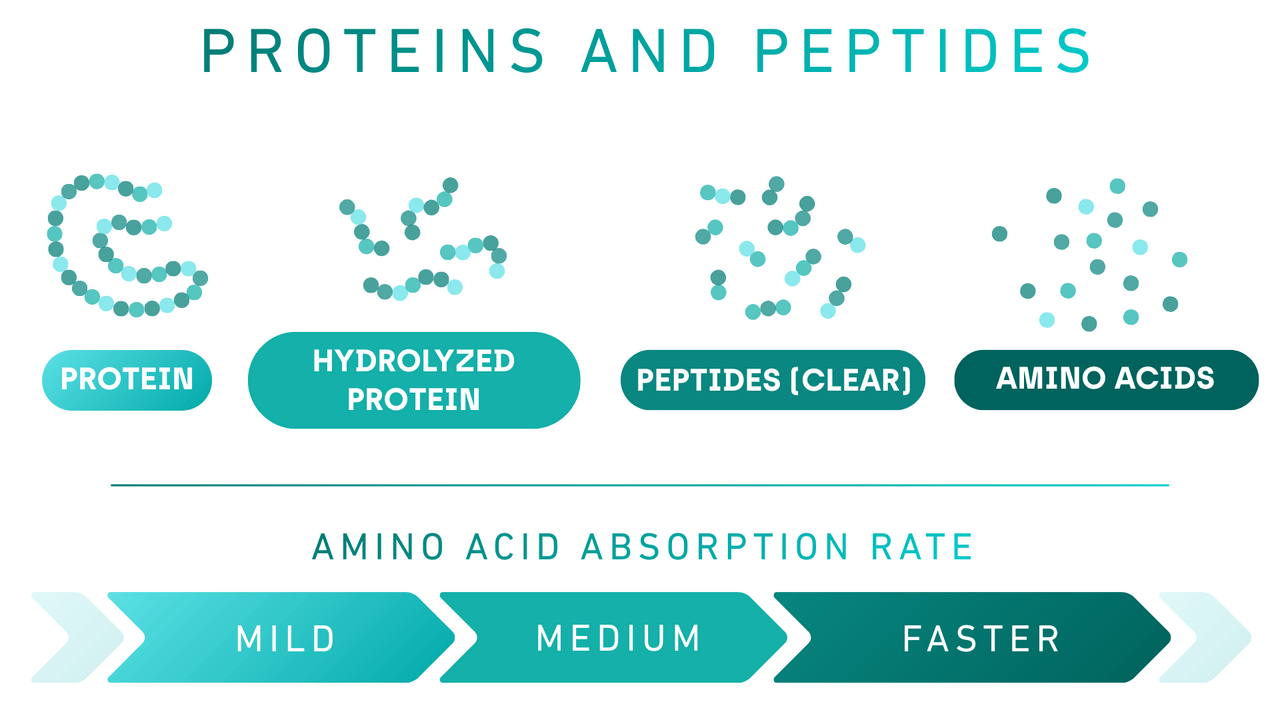
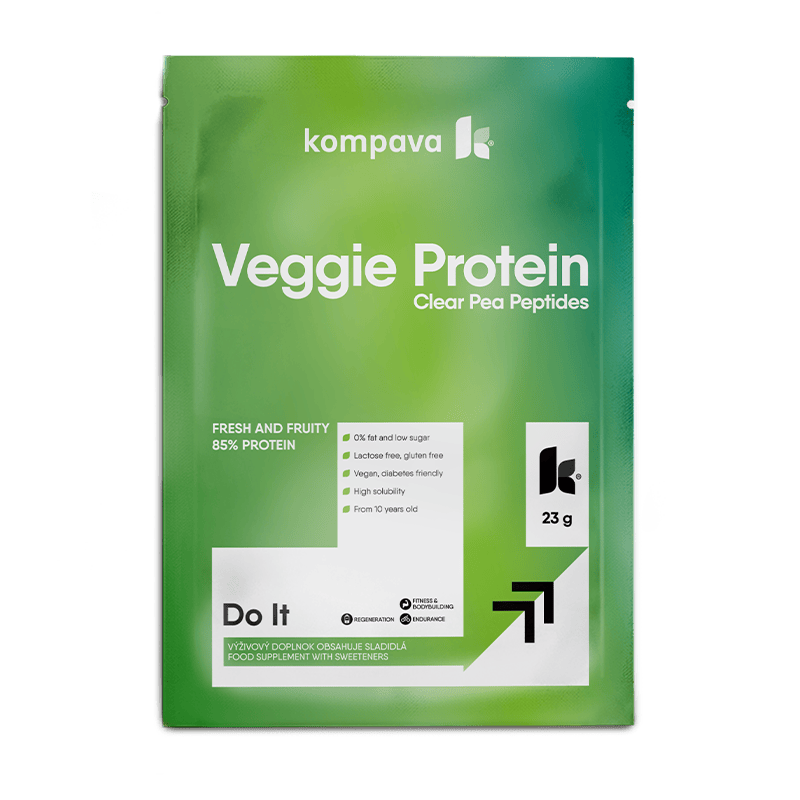

The difference between protein, hydrolysate, and peptides is not in the amount of protein, but in the speed at which the body can utilize it.
Classic protein (intact protein)
What it is: Whole protein molecules (e.g., whey concentrate, isolate, plant protein).
Advantages: physiologically natural form, slower digestion → longer satiety, suitable for regular protein supplementation, lower raw material cost
Limitations: requires complete digestion (stomach → pancreas → intestine), may cause bloating in sensitive individuals, slower availability of amino acids after training
Ideal use: daily nutrition, proteins for a healthy population, maintenance products (e.g., daily protein)
Hydrolyzed protein
What it is: Protein enzymatically broken down into shorter chains (di- and tri-peptides).
Advantages: faster digestion and absorption, lower allergenicity, less strain on the digestive tract, suitable after training and during recovery
Limitations: bitterness (technological challenge), higher price, less filling than intact protein
Ideal use: sports recovery,people with sensitive digestion, clinical and functional nutrition
Peptide form (clear peptides)
What it is: Highly controlled hydrolysate with a defined proportion of short peptides, often in clear form.
Advantages: highest bioavailability, extremely fast absorption (PEPT1 transporters), does not burden digestion, allows for a clear, refreshing consistency, minimal risk of intolerance
Limitations: most technologically demanding form, higher raw material cost, shorter feeling of satiety
Ideal use: clear proteins, daytime/intra-workout sports, diets, people with digestive problems
Amino acids (free form)
What it is: Individual amino acids (BCAA, EAA, glutamine, etc.).
Advantages: immediate availability, precise targeting (e.g., regeneration, immunity)
Limitations: do not replace complete protein, zero satiety effect, higher osmotic load
Ideal use: supplement to protein, not a substitute, specific functional products
The rate of absorption determines how quickly amino acids appear in the blood.
Amino acids (especially essential ones, e.g., leucine) physiologically stimulate insulin,
Insulin does not serve to regulate sugar here, but as a transport signal, helping to get amino acids from the blood into muscle cells.